Recycling Plants

技術データシート PV Entry Level Recycling Line

   Description

1. 概要

PV Entry Level Recycling Lineは、Stokkermill Solarシリーズのエントリーモデルとして位置づけられるソリューションです。使用済み太陽光発電パネルのリサイクル事業を開始したい事業者様に向けて設計された、初期導入に最適な高品質でリーズナブルな装置で、同時に高い商業価値を持つ回収材料の生成を実現します。

本設備は2つの主要な目的を追求します。第一に、フレーム分離装置によるアルミニウムフレームの除去とその後の有価物化です。第二に、ガラス混入を完全に排除したEVA/バックシートの回収です。後者は、優れた収益性と今後さらなる拡大が見込まれる市場性を備えた高付加価値材料です。

本システムの技術的な狙いは、迅速かつ効率的に処理する事により、有価物をより効果的に回収することにあります。

2. ライン構成

本設備は、2台の主要機械で構成される連続ラインとして設計されています:

●  フレーム分離装置:投入工程において、太陽光パネルからアルミニウムフレームを機械的に除去する専用モジュールです。

●  Stokkermill DLS デラミネーター:バックシートからガラスを機械的に分離する先進の処理ユニットです。赤外線加熱システムとすクレーピング動作を組み合わせることで、ガラス残渣を含ないEVA/バックシートの生成を実現します。

3. 加工サイクル

加工プロセスは、以下の2つの主要フェーズで構成され、順次実施されます:

●  フェーズ1 — フレーム除去とアルミニウム回収:太陽光モジュールは、アルミフレームを装着した状態でラインに投入されます。最初のステップはフレーム分離で、フレームを機械的に取り外し、後続工程への準備を行う必須工程です。この工程により、アルミニウムの回収と即時の有価物化が可能となり、異物混入を最小限に抑えた明確な分離を実現します。

●  フェーズ2 — 自動剥離:フレームを除去したパネルは、Stokkermill DLSデラミネーターへ搬送されます。本ユニットは、コンベヤベルトによって投入材料を自動的に Stokkermill DLS デラミネーターに投入し、以下のステップで構成されます:

●  投入:入力材料は、専用コンベヤベルト上に配置・搬送されます。

●  処理:赤外線照射システムが、 EVA/バックシート層を軟化させます。この的確な熱処理により、ガラス残渣の付着力を大幅に低下させると同時に、材料の溶融を防ぐ制御された温度で作動します。

●  分離と排出:除去されたガラス片は回収され、個別に保管されます。同時に、EVA/バックシートが排出セクションから回収され、ガラスとバックシートが分離された状態で回収されます。

4. 回収物・アウトプット

加工サイクルの完了時、本設備からは分離された2つの材料フローを回収することができます:

●  EVA/バックシート(ガラスなし):本システムの主要アウトプットです。バックシートはガラスなし、無傷の状態で回収され、有価物としてリサイクル性を向上します。

●  回収ガラス:個別に回収され、専用のリサイクル・回収ルートへの引き渡し準備が整った状態です。
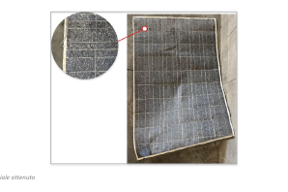
回収材料:ガラス残渣を含まないEVA/バックシートマット。

5. プロセスフロー図

プロセスフロー:フレーム付きPVパネル → フレーム分離装置 → DLSデラミネーター → EVA/バックシート

6. ラインの主な技術仕様

```html
ライン構成 フレーム分離装置 + Stokkermill DLS デラミネーター
処理能力 40〜60 パネル/時
回収物 ガラスなしEVA/バックシート + ガラス
総設置電力 20〜45 kW(変動)
概算外形寸法 10000 × 3000 × 2100 mm
概算総重量 8000 kg
```

7. 運用上のメリット

●  初期投資(CAPEX)の抑制:大規模プラットフォームと比較して初期投資を抑えられるため、コンパクトかつ専用の設備を通じて太陽光パネルリサイクル事業を開始するための理想的なソリューションです。

●  高付加価値なアウトプット:主要製品(ガラスを含まないEVA/バックシート)は、高い収益性を保証します。

●  環境・作業安全性:加工プロセス全体がライン内に完結しているため、粉塵やガラス片が周囲の作業環境に飛散するリスクをゼロに抑えます。

●  有害排出物なし:熱処理はEVAポリマーの軟化のみに厳密に限定されており、溶融点への到達を回避し、有害な排気の発生を防ぎます。

●  高純度の回収物:本システムは、明確な機械的分離と処理済み材料(バックシートとガラス)の分別回収を保証します。

●  拡張性:本設備は拡張可能な基盤を提供し、将来的な処理量の増加に対応するため、Solar DelaminationまたはSolar Automaticシステムへの統合・技術アップグレードが可能です。

Frequently asked questions
What arethe key technologies used in a solar panel recycling plant to separatematerials?

Stokkermill solar panel recycling plant uses a combination of mechanical processes, such as crushing, shredding, and grinding, followed by air classification, vibrating screens, and magnetic separation to separate materials like silicon, glass, aluminum, and plastics. These processes ensure that each material is recovered with high purity and minimal contamination.

How does a solar panel recycling plant handle the recovery of silicon from panels?

In Stokkermill solar panel recycling plant, silicon is typically recovered through a multi-step process. After the panels are shredded and crushed, the silicon is separated from the other materials using chemical processes or thermal treatment. This recovery process is designed to maximize the yield of high-quality silicon that can be reused in new solar panels or other industries.

What is the role of glass recycling in a solar panel recycling plant?

Glass is one of the most significant components of a solar panel, and the Stokkermill solar panel recycling plant is designed to recover it efficiently. Glass is separated from the panel after the silicon and metal components are removed. The recovered glass is cleaned, processed, and repurposed for use in the production of new solar panels or as raw material for other industries such as construction or automotive.

What technologies are used for glass recovery in solar panels at a solar panel recycling plant?

Glass in solar panels is separated through an advanced mechanical process that includes crushing, vibration, and density-based separation. The Stokkermill solar panel recycling plant also uses high-frequency vibration technologies to optimize the recovery of pure glass, which is then cleaned and reused in the production of new solar panels or in other industrial applications.

Technical Specifications — LCD Screen Recycling Line

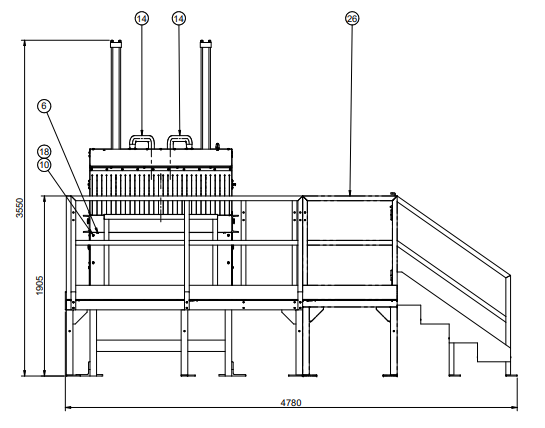
LCD recycling line render
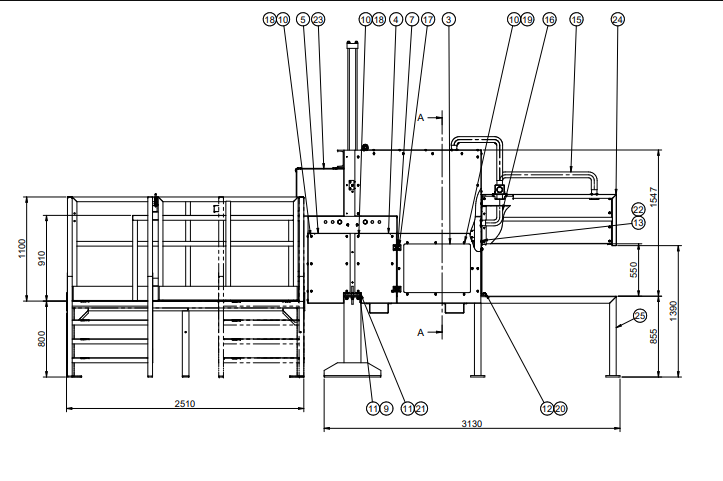
LCD line side drawing
LCD line front drawing

General Data

  • Brand: Stokkermill
  • Model: LCD screen recycling line
  • Total weight: 2,435.7 kg

Main Dimensions

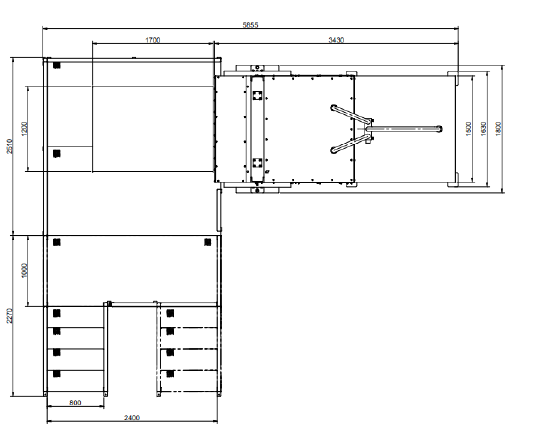
  • Total length: 5,855 mm
  • Maximum width: 4,780 mm
  • Maximum height: 3,550 mm
  • Worktop height: 1,100 mm
  • Walkway width: 2,510 mm
  • Stair width: 800 mm
  • Walkway depth: 2,270 mm
  • Footprint: ≈ 5.86 m × 4.78 m

Structure

  • Welded steel base frame (painted)
  • Walkway with safety guardrails on three sides
  • Access stairs with double handrail
  • Protective hood for cutting/press area
  • Side doors and inspection panels

Main Components

  • Cutting hood (code 061 016 A05 00)
  • Base frame (code 061 016 A06 00)
  • Walkway (code 061 016 A07 00)
  • Upper press assembly (code 061 016 A04 00)
  • Removable front/side covers for maintenance
  • Polyurethane hoses Ø 60 mm for suction/discharge

Accessories & Hardware

  • Fasteners UNI EN 24017 (M6, M8, M10, M16)
  • Washers UNI 6592 / UNI 6593
  • Self-locking nuts UNI 7473
  • Hinges ELESA CFH.50 CH-8
  • Latches Pizzato KEY F2

Functional Features

  • Machine for LCD shearing/pressing
  • Closed structure with operator safety protections
  • Top loading and rear discharge
  • Ready for external suction plant connection
  • Raised operator station for manual or semi-automatic feed

Safety

  • Anti-fall guardrails compliant with CE directives
  • Side doors with safety interlocks
  • Metal and mesh protections in access areas
  • Compliant with CE machinery safety regulations

Replace the image URLs above with your Webflow Asset URLs (render + two technical drawings).