Solar panel recycling plant, delamination model

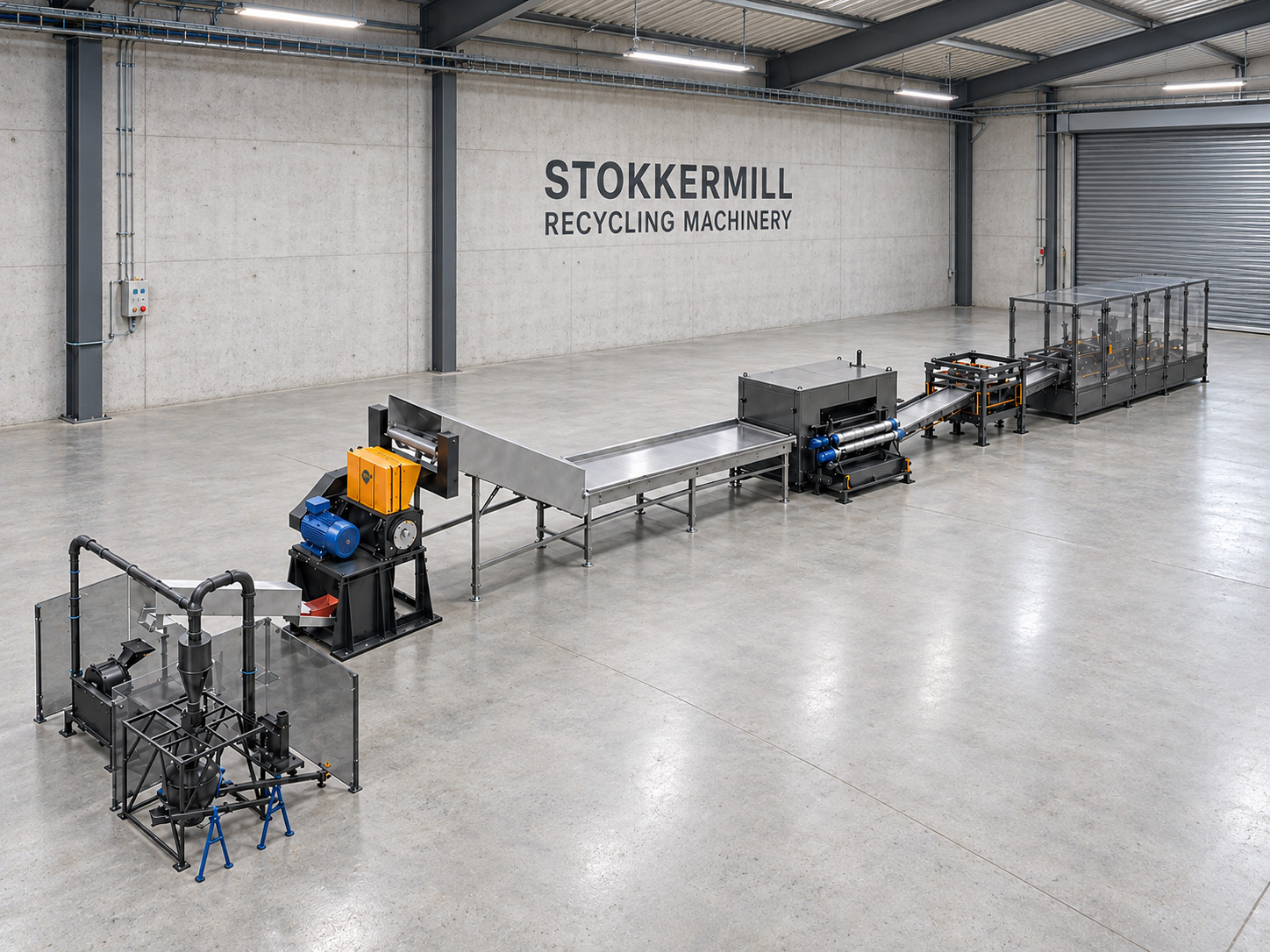
The Stokkermill Solar Delamination system is an integrated, semi-automatic solution designed for processing end-of-life photovoltaic modules. The line combines frame removal, delamination and subsequent refinement of the EVA- and silicon-containing fractions, allowing the primary materials contained in the modules to be recovered separately.
With an indicative capacity of 1.5–2.0 tonnes per hour, the system is suitable for operators processing controlled industrial volumes without requiring a fully automated line.
An Integrated Two-Stage Process
The recycling process is organised into two consecutive stages. During the first stage, the frames are removed from the photovoltaic modules before the modules are processed by the Stokkermill DLS Delaminator. This stage removes the aluminium frame and recovers the glass fraction.
The remaining material, consisting primarily of the laminated components of the module, is then transferred to the second section of the line, where the EVA- and silicon-containing fractions are further processed and refined.
Combining these two stages creates a coordinated process, reduces intermediate material handling and prepares differentiated output fractions for subsequent recovery and upgrading operations.
Photovoltaic Module Frame Removal and Delamination
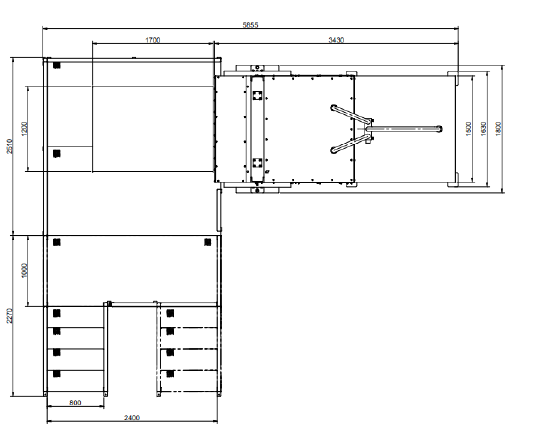
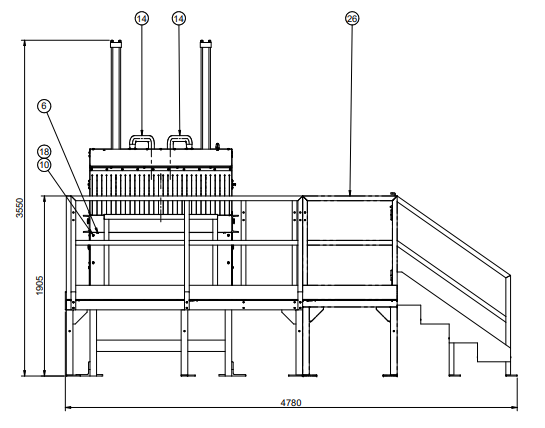
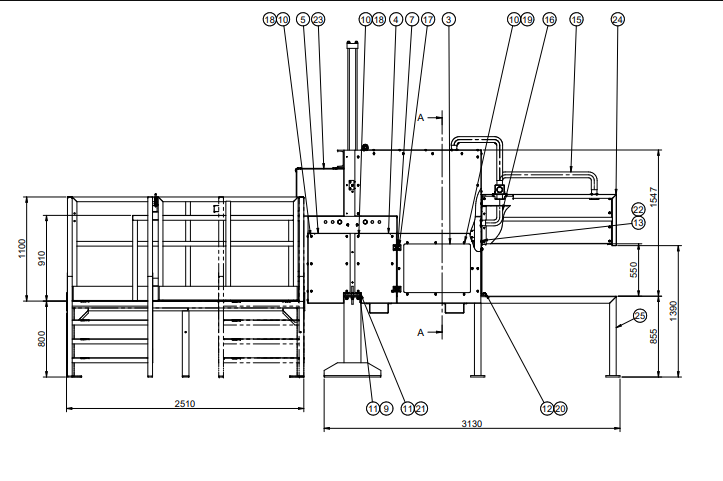
The first section of the line includes the frame removal unit and the Stokkermill DLS Delaminator.
The frame removal unit removes the perimeter aluminium frame, allowing the aluminium to be recovered separately while preparing the module for the next processing stage. The module is then fed into the DLS system, which performs the delamination process and separates the glass component from the laminated structure.
The primary output from this stage is recovered glass. The remaining EVA/backsheet fraction, which contains the photovoltaic cells and associated materials, continues to the refinement section.
EVA and Silicon Fraction Refinement
After the glass has been removed, the remaining material is processed by the EVA–Silicon Refining System.
This second stage reduces and processes the laminated material received from the delaminator to produce two differentiated fractions:
- an EVA- and backsheet-rich fraction;
- a silicon-containing fraction derived from the photovoltaic cells.
The system does not produce pure silicon and does not replace any subsequent metallurgical or refining processes that may be required. Its purpose is to mechanically prepare and separate the materials, producing more homogeneous fractions that are easier to handle and process during subsequent recovery operations.
Recovered Materials
The Solar Delamination process produces separate streams of the primary materials contained in photovoltaic modules:
- aluminium recovered during frame removal;
- glass recovered during delamination;
- an EVA- and backsheet-rich fraction;
- a silicon-containing fraction derived from the photovoltaic cells.
The composition and characteristics of these outputs may vary depending on the type, construction and condition of the modules being processed.
Stokkermill Solar Technology
Stokkermill Solar develops dedicated solutions for processing and recycling end-of-life photovoltaic modules, ranging from individual machines to fully integrated automatic plants.
The Solar Delamination system combines frame removal, delamination and fraction refinement within a coordinated platform, providing an industrial solution for glass recovery and the preparation of EVA- and silicon-containing fractions.